
Waukesha County Arrest Log Limits
Waukesha County does not publish a recurring multi-day booking blotter. That gap shapes every search. The Sheriff’s Reports page holds historical write-ups and critical-incident material. The News Releases page posts dated announcements tied to specific events. Neither one promises a complete booking roster. There is no set schedule, no stated archive depth, and no rule about photos.
The hourly inmate PDF has its own blind spots. It shows who is in custody now. It cannot tell you which day that person was arrested. Someone released before a later export may leave no public row at all. A news story can cover one arrest. Yet it may skip the booking number and bond. WCCA may later show a filed case under a different charge caption. Or it may show none at all if prosecutors declined or diversion followed.
Current is not historical. The Sheriff PDF is a rolling snapshot. "Updated hourly" does not mean older versions or a date-range archive exist online.
| Requested log | Official result | Most useful fallback |
|---|---|---|
| Last 24 hours | No dedicated booking feed located | Current PDF plus Jail Records |
| 72 hours or a week | No recurring archive located | Arresting agency, Jail Records, WCCA |
| Older incident | No public jail-PDF history located | Records request and newspaper archive |
How to Read a Waukesha Blotter
Treat a multi-day search as reconciliation work. Start with the date range and the agency named in the report. Then check the event against current custody, the court record, and the records custodian. Never add facts the source does not show.
- Write down the publication date, event date, named agency, charge language, and case number if present.
- Check the current county PDF only for present custody, recording its as-of time.
- Search WCCA for a Waukesha County case, then verify party and case context.
- Ask the arresting agency or Jail Records for an existing record covering the bounded date range.
- Compare later updates with the original report and label each as charge, custody status, or disposition.
This workflow keeps one selected story from becoming a fake daily arrest list. It also helps with spelling differences and jurisdiction changes. A Waukesha Police report, a Brookfield Crime Map entry, or a New Berlin monthly activity report can describe a municipal event. Meanwhile the county jail PDF may say nothing at all.
Need the county record itself? The Sheriff’s Records Division sits at 515 W Moreland Boulevard. It is open weekdays from 8:00 a.m. to 4:30 p.m. Reach it at (262) 548-7156. Separate SheriffRecords and JailRecords email addresses exist. Copy fees run $0.25 per page and $10 per CD/DVD. No booking-photo fee or fixed response time is posted.
A report page can matter for one incident. It still cannot show how many other people were booked that same period. The official reports source deserves to be described by what it publishes. Do not call it an "arrest log."
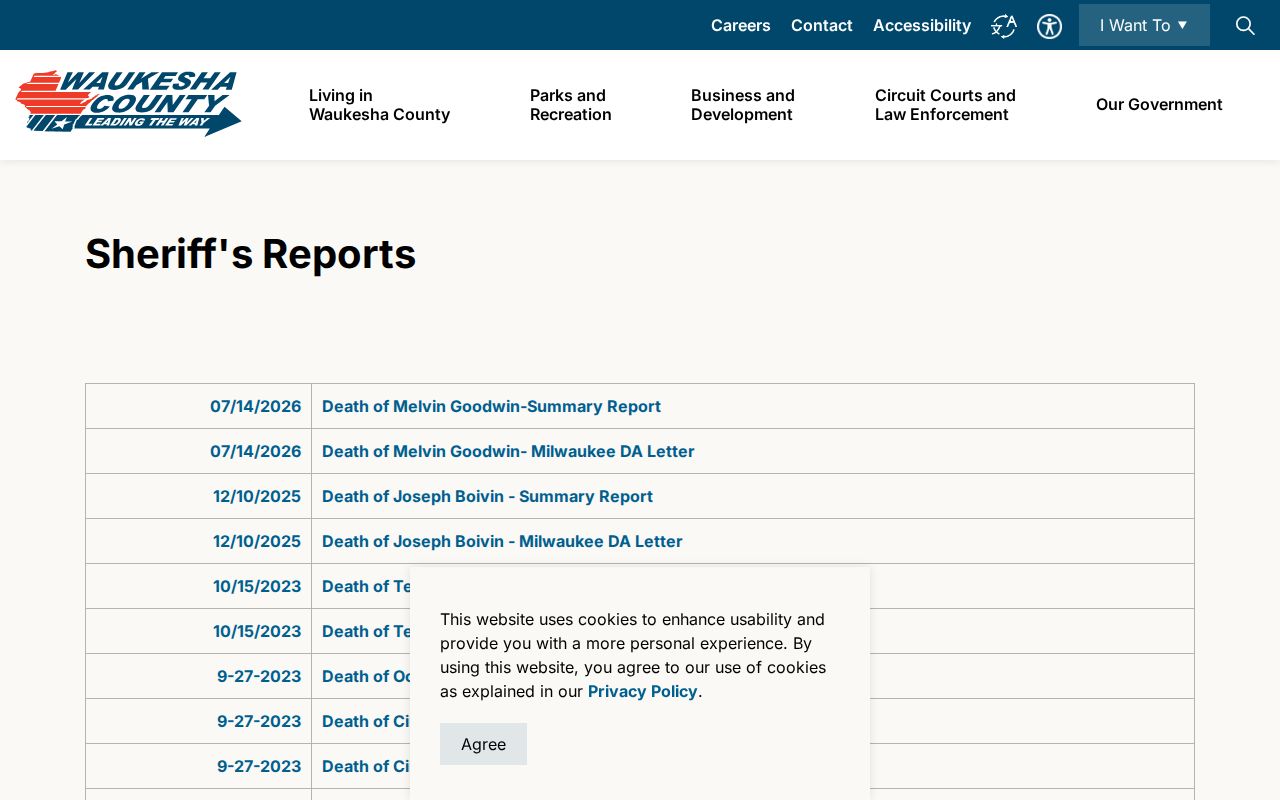
One story proves one event. It never proves the whole day’s bookings in Waukesha County.
Weekend and Holiday Posting Patterns
No Waukesha County source posts a weekend or holiday exception for the inmate PDF. No county page lists a multi-day posting schedule either. That silence matters. Police activity, court dates, releases, and newsroom output can all cluster around weekends and holidays, but no county-specific count or guaranteed posting time exists.
News releases are selective by design. A high-profile incident may draw a quick announcement. A routine arrest may never get one. The Sheriff’s Public Information and Media page points to releases, bulletins, reports, news conferences, Facebook, Instagram, X, and YouTube. Those are outreach channels, not synchronized booking systems. A social post can also be edited or deleted later.
The Sheriff News Releases page shows this event-driven approach at work. It is a solid source for selected public-interest incidents. It does not claim to list every arrest.
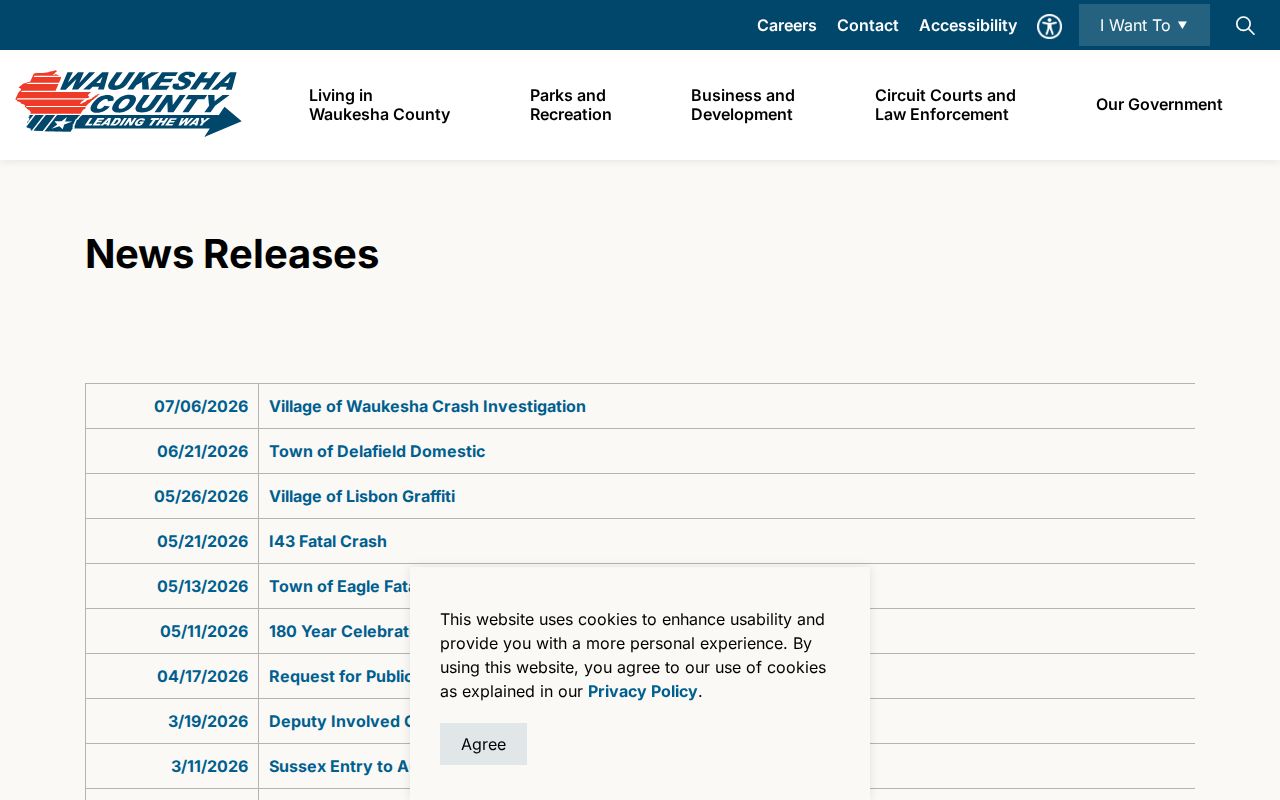
Keep the release date and the event date separate. A report published after a weekend event is not proof the booking happened that same day.
What if no weekend story appears? Silence is not a negative finding. An absent news item does not mean no arrest occurred. Go to the custodian that holds the record instead.
The Freeman Police-Blotter Layer
The Freeman, through its GMToday local section, is the steadiest newspaper route for recurring Waukesha police-blotter coverage. That section carries local arrest items week after week. Keep in mind what it is, though: editorial coverage, not a Sheriff database. Editors pick which arrests make the page. Publication can lag the incident by days, and names or booking photos may be left out entirely. Older stories may sit behind an archive wall or NewsBank access. None of that makes the reporting wrong. It just means the paper follows newsroom judgment rather than a booking schedule. When a story helps, pull its practical details before leaning on it. Grab the publication date, the date of the event, the agency named, and any case number. The exact wording matters too. The paper's local section is available at The Freeman's official local-news path, presented as a blotter and news source rather than an official booking feed.
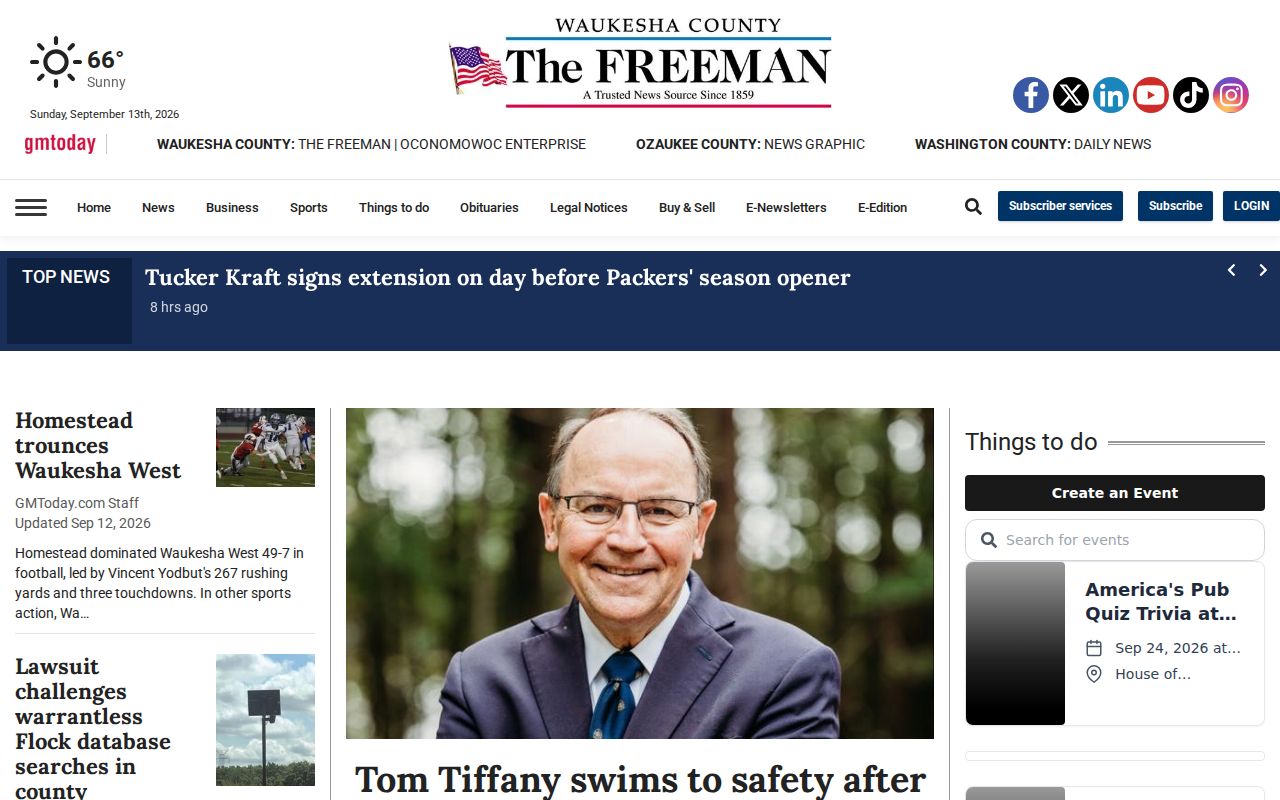
News stories add context, not answers. The exact record question still belongs to a custodian or court source. Patch Waukesha, FOX6, TMJ4, and WISN 12 each cover selected public-safety stories in Waukesha County. No station runs a countywide booking roster. So date and link any story before relying on it.
Records Beyond the Published Window
Need a Waukesha County booking older than the online window? Send a request with tight date bounds. The county does not publish a jail-specific retention schedule for booking records, booking photos, or past PDF versions. That silence proves nothing about destruction. It just means the depth is not published online.
Ask Jail Records directly whether a booking record still exists, or whether it was transferred, exempted, redacted, or destroyed. The arresting agency holds the incident record. A precise request names the full name, approximate date, agency, location, case number, and record parts you want. Wisconsin's public-records guide still applies its access rules, exceptions, redaction, and balancing test.
Older court material lives in WCCA and the Clerk of Circuit Court. Old news? Try the Wisconsin Historical Society newspaper guide. It lists Waukesha Freeman holdings and other local papers. The Waukesha County Historical Society and Museum makes a reasonable local-history contact, though it lists no modern booking photos.
| Record question | Custodian or path |
|---|---|
| County booking record | Waukesha Jail Records |
| Municipal arrest incident | Arresting city police records |
| Court disposition | WCCA or Clerk of Circuit Court |
| Historical article | Newspaper archive or Wisconsin Historical Society |
Never turn "not found" into "did not happen." A Waukesha County record may sit with a different agency, carry a different charge caption, or fall under a legal limit. Public display also ends at some point.
Selected Sources and Local Coverage
Official sources come first in any arrest log search. The Waukesha County current custody list answers who is in custody right now. Sheriff releases and reports cover selected official communications, WCCA covers filed court activity, and records units answer existing-record requests. The Wisconsin DOC, ICE, USMS, and BOP locators belong to separate custody systems. Never merge them into one log.
Treat private aggregators as leads only. Busted Newspaper and RecentlyBooked list no confirmed Waukesha section. Mugshots.com and Arrests.org do show Waukesha paths. A private page can carry an old photo or charge label with no update behind it. Official correction routes and court records still outrank them. No source grants permission to republish person-specific photos.
The Sheriff Public Information and Media page is the strongest official hub for releases and social channels. The Records Division page is the best request route. The county recent-arrests hub pulls these together with the roster, law, warrants, and city routes.
End a multi-day search with a source statement: what was searched, when, what each source showed, and what stayed unknown. That beats a long list stitched from systems with different rhythms.
Arrest Log Entries Are Allegations
Cases move after the booking entry appears. Diversion can redirect a matter before filing or after it begins. Charges get reduced or dropped. Someone arrested may be released before any online source records the later result, so the log always lags the court file.
Outcomes live in the court file. Go there before repeating anything. A single blotter story never tells the full Waukesha County account, whatever the headline promises.
Source discipline answers the multi-day question. Name the agency, keep the dates, and compare the current custody list with court activity. If pages skip your window, ask for the record.
Public Record Search
Sponsored Results